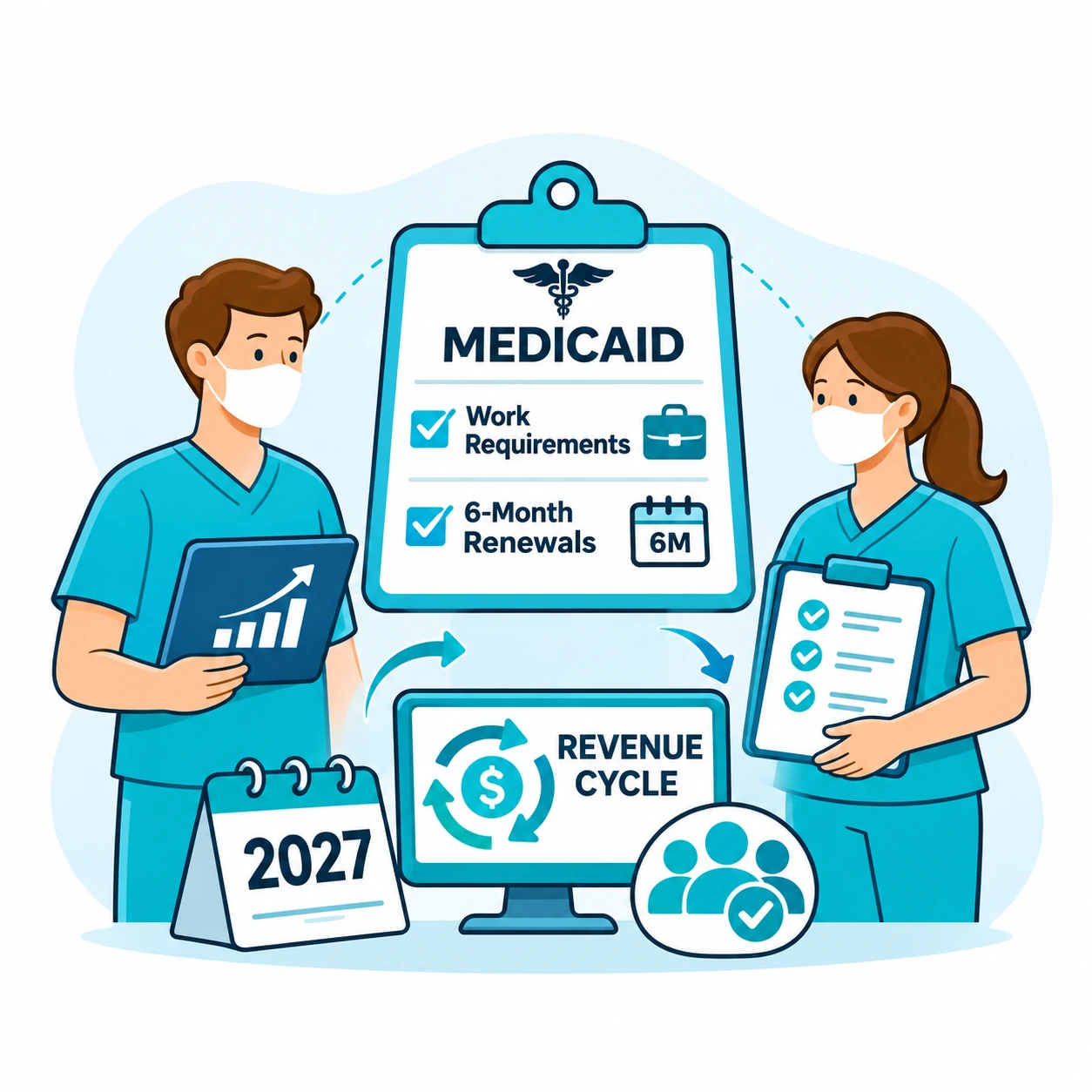
Crisis stabilization units, withdrawal management programs and residential treatment centers often admit people who are uninsured on the day they arrive. For years, Medicaid's retroactive coverage gave providers a safety net: if the patient applied and qualified, Medicaid could pay for care delivered up to three months before the application.
That safety net shrinks on January 1, 2027. Eligibility, already the first of the five reasons payers say no, gets harder to get right.
What Changes
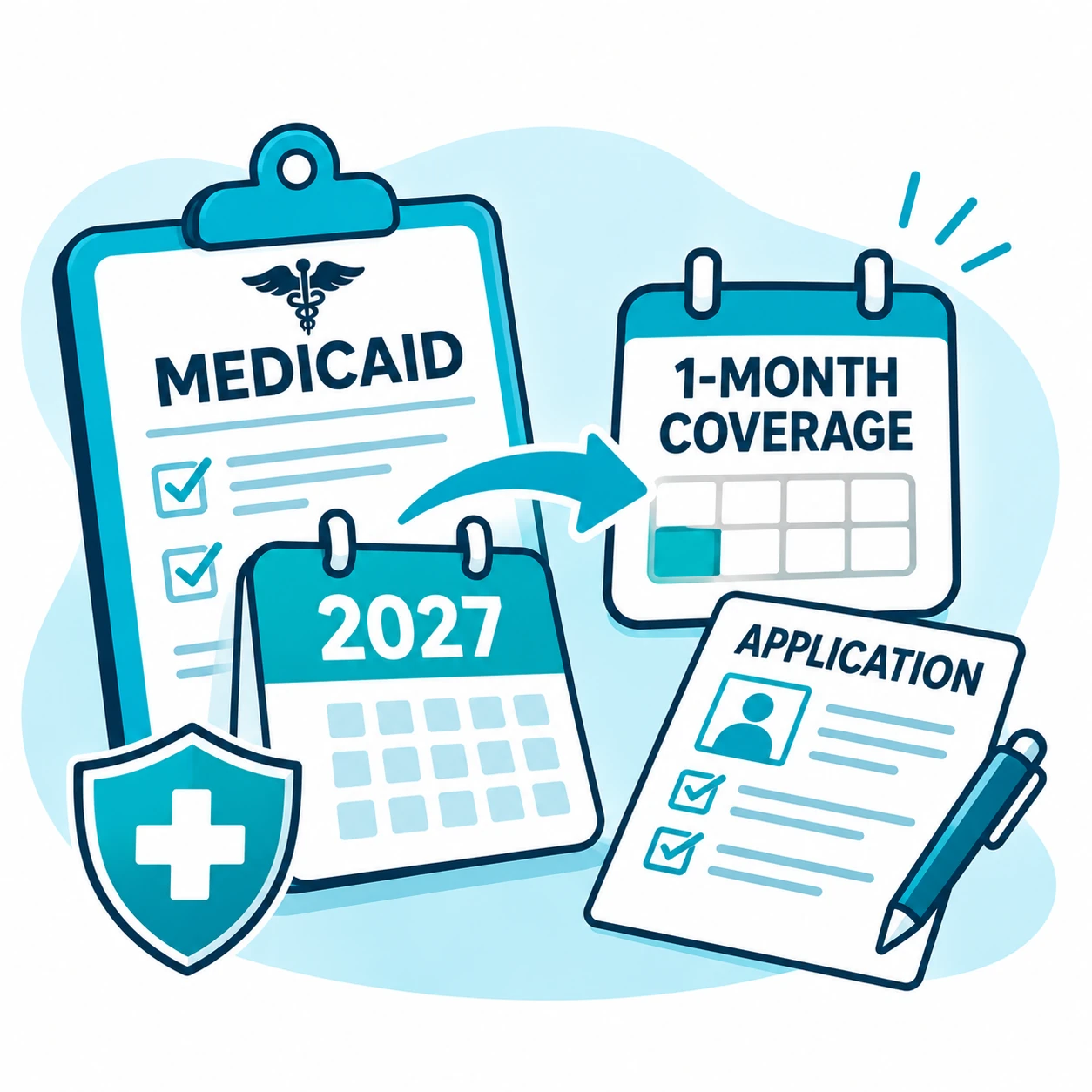
Under the 2025 federal budget law (Public Law 119-21, section 71112), for applications made on or after January 1, 2027:
| Group | Retroactive coverage today | Starting January 1, 2027 |
|---|---|---|
| Medicaid expansion adults | Up to 3 months before application | 1 month before application |
| Other Medicaid and CHIP applicants | Up to 3 months before application | 2 months before application |
Some states already limited retroactive coverage through waivers, but for most, this is a significant change.
Why Behavioral Health Programs Feel It First
Behavioral health admissions are often unplanned. A person in crisis is not thinking about an application, and paperwork usually waits until the patient is stable. Under the new rule, every week between admission and application can become a week no one pays for.
Crisis stabilization and mobile crisis episodes for people without active coverage.
Withdrawal management and residential substance use treatment stays that begin before enrollment.
Inpatient psychiatric admissions where the application is filed after discharge.
Patients who lost coverage at a renewal and did not notice until they needed care.
Move Enrollment to the Front Door
The answer is to treat enrollment as part of intake, the same way you treat consent or a clinical assessment.
At admission
Screen every uninsured or unknown-coverage patient for Medicaid eligibility at intake.
Start the application the same day, or within the first 72 hours, with patient consent.
Use presumptive or hospital presumptive eligibility where your state and facility type allow it.

During the stay
Assign a named staff member to complete and follow every application through approval.
Record the application date so billing knows exactly which service dates are covered.
Check whether patients have other coverage, including marketplace or employer plans, before services age out.
After discharge
Track pending applications weekly and submit claims as soon as coverage posts.
Apply your financial assistance and self-pay policies consistently to dates that fall outside the window.
Report uncompensated care tied to the new rule to leadership and county partners.
Measure What You Are Losing
Start tracking three numbers now: days from admission to application, the share of uninsured admissions enrolled within one month, and service dates that fall outside the retroactive window. Those numbers show where to focus and give you evidence in county and state rate discussions.

Where Symed Fits
Symed, the Behavioral Health Division of Cosentus, runs on Smart RCM: Cosentus experts and Zeus Health, a Cosentus Division, working as one team. Zeus Health checks every claim before it goes out, and named expert teams handle every eligibility gap, authorization, denial and appeal. One partner covers billing, coding, eligibility, claims and even the EHR (optional), among other services, so no claim falls between vendors. Zeus Health runs nearly $1 Billion in claims annually, and Cosentus has served physicians since 1999.
One community behavioral care provider grew revenue 8x, from $1.2M in 2022 to a projected $10M in 2025. Individual results vary.
FAQs
The Bottom Line
When Medicaid looks back only one month, the clock starts at your front door. Behavioral health programs that make enrollment part of intake will keep getting paid for the care they already provide.
Find out how much care your agency delivers before coverage starts. Know your numbers before you switch billing partners. Start with the No-Cost Financial MRI (Valued at $10,000): Symed checks every claim against the five reasons payers say no, and you keep a dollars-by-reason report and a 90-day action plan.